

How to Match Diesel Performance Upgrades for Towing
Last Updated: November 15, 2026
Quick Summary
Match diesel performance upgrades by first identifying your engine generation and injection system, then sequencing parts so each stage supports the next. Start with a baseline health check, then fuel delivery, exhaust manifold, turbo, tuning and supporting systems. Confirm the turbo and manifold flanges match before buying, and verify gains by testing one stage at a time.
- Confirm your injection pump type and turbo flange style before buying any parts.
- Buy the turbo only after the manifold's flange layout is confirmed to match.
- Size fuel delivery to the airflow the turbo can supply at your intended boost.
- Check clutch and transmission torque capacity before adding a turbo and tuning.
- Record baseline boost, EGT and fuel pressure, then change one stage at a time.
Table of Contents
- How to Match Diesel Performance Upgrades to Your Cummins
- Choosing a Staged Upgrade Plan That Works Together
- Cummins Turbocharger Upgrade: Matching Turbo, Manifold and Downpipe
- Cummins P7100 Pump Upgrades and Fuel Delivery
- 12-Valve Cummins Performance Upgrades and Exhaust Flow
- Diesel Towing Performance Upgrades: Reliability, Cost and Testing
- Planning Your Next Upgrade Step With EPC
- Frequently Asked Questions
How to Match Diesel Performance Upgrades to Your Cummins
Mismatched diesel performance upgrades can leave a towing truck feeling worse after a build.
Identify your exact engine generation and injection system before buying anything. A 12-valve, a 24-valve and a 6.7 each have different fitment, fuel demands and exhaust layouts.
Watch out: ordering a turbo or manifold before confirming the flange and clearance spec often means a return or a fabrication bill. Measure first, then buy.
Choosing a Staged Upgrade Plan That Works Together
Performance upgrades work as a system. Adding airflow without fuel, or fuel without boost control, creates imbalance rather than power.
The most common failure is buying the headline component first. A larger turbo on a standard fuel system delivers boost the engine cannot fuel, raising EGTs without useful power. Fuelling up before airflow produces smoke, high EGTs and poor driveability.
A practical sequence for a towing build
| Stage | Component | Purpose | What to confirm before buying |
|---|---|---|---|
| 0 | Baseline health check | Establish a reference point | Compression, injector condition, boost and EGT readings under load |
| 1 | Fuel delivery | Supply the fuel the engine can burn | Pump and rail capacity matched to target output; lift pump pressure steady |
| 2 | Exhaust manifold | Improve exhaust flow and turbo response | Flange type (T3 or T4, single or twin-scroll) and engine-bay clearance |
| 3 | Turbocharger | Increase airflow to match fuel | Flow matched to the rpm range you actually tow in, not peak rpm |
| 4 | Tuning and monitoring | Keep air-fuel ratio and EGTs in range | Baseline readings recorded before and after each stage |
| 5 | Supporting systems | Protect the gains | Cooling, transmission and clutch rated for the new torque |
Complete and check each stage before adding the next. This keeps cost predictable and makes problems easier to diagnose.
Pairing rules that prevent mismatches
Some components must be chosen together rather than sequentially:
- Turbo and manifold. The manifold defines the turbo mounting platform, so decide the flange layout before ordering the turbo. A T4 twin-scroll manifold will not accept a T3 turbo without an adapter, and adapters cost flow and clearance.
- Turbo and downpipe. The downpipe must match the turbo outlet and exhaust route. A downpipe that necks down behind the turbine undoes much of the larger turbo's benefit.
- Fuel and turbo. Size fuel delivery to the airflow the turbo can supply at your intended boost. Oversized fuel with a small turbo produces heat, not power.
When supporting changes become necessary
The first three stages are usually bolt-on; the fourth and fifth are where budgets blow out. Once torque rises meaningfully above standard, plan for:
- Transmission and clutch. A clutch rated for standard torque will slip under a towing load with added torque. Automatics may need valve-body work or a converter change to hold the extra torque without overheating.
- Cooling. Sustained towing raises coolant and intake temperatures. Review intercooler and radiator capacity before, not after, the turbo is fitted.
- Fuel lift. A lift pump that cannot maintain pressure under load will starve the injection pump, a reliability problem, not a performance one.
Watch out: adding a turbo and tuning without checking clutch or transmission torque capacity is the most common way a towing build becomes undriveable within a few thousand kilometres.
Realistic gains and how to verify them
Treat any advertised gain as an upper bound and verify it on your own vehicle.
A practical verification method:
- Record baseline boost, EGT, fuel pressure and, where possible, a dyno or timed-load run before any change.
- Change one stage at a time.
- Repeat the same test under the same conditions, same load, same ambient temperature, same route or dyno procedure.
- Compare the before-and-after figures rather than the advertised figures.
Total cost, not component cost
Budget for the full system, not the part that caught your attention. A stage's true cost includes the component, fitting labour, tuning time, supporting parts (gaskets, studs, oil lines, downpipe) and follow-on maintenance. A cheap part that fails on the road costs more than the part it replaced. Set the budget against the whole sequence and add contingency for the supporting changes stages 4 and 5 usually reveal.
Cummins Turbocharger Upgrade: Matching Turbo, Manifold and Downpipe
A turbo upgrade only performs as well as the parts around it. The turbo, manifold and downpipe must share compatible flanges and a workable exhaust path. Mismatched components restrict flow and can cause leaks that cost boost.
For a common towing setup, the manifold is the first component to match, because it defines the turbo mounting platform. EPC's 24VT4TS40 and 12VT3TS40 manifolds, for example, are built around specific T4 and T3 twin-scroll flange layouts, so the turbo you choose has to fit that flange.
2nd Gen Turbo Swap Considerations for the 6.7 Cummins
A 2nd Gen turbo swap on a 6.7 Cummins changes the packaging around the engine bay. The EPC 24VT4TS40 is a T4 twin-scroll manifold in 347 stainless steel, with a 10mm extended turbo flange for added clearance and dual EGT probe ports. Before ordering, confirm the turbocharger, intake and downpipe are compatible with a T4 layout, and check fitment against your truck year.
Many builders underestimate the oil feed and drain work on a swap like this. Plan that line early, before the turbo is bolted into place.
Cummins P7100 Pump Upgrades and Fuel Delivery
Fuel delivery sets the ceiling for how much a turbo can do.
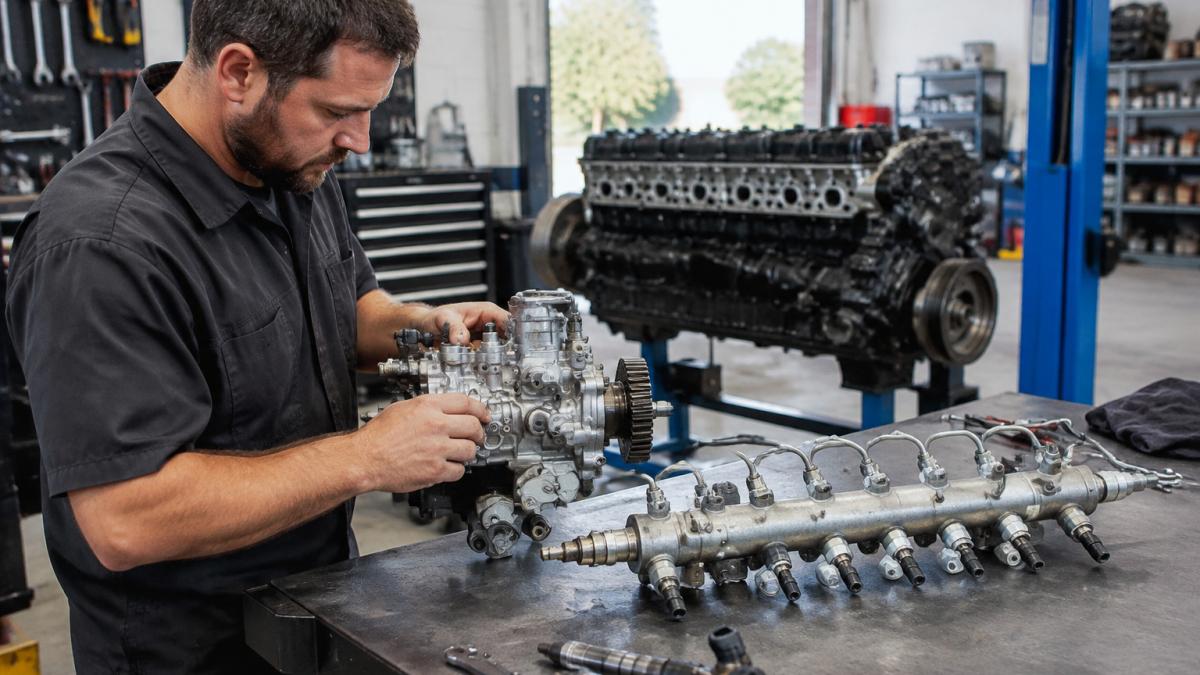
The EPC P7100 Hyper Camshaft (from $949.99) adds 0.532 mm of lift over a Bosch-style 180/215 camshaft, with a curved lift ramp designed to increase injection rate and support greater fuel flow.
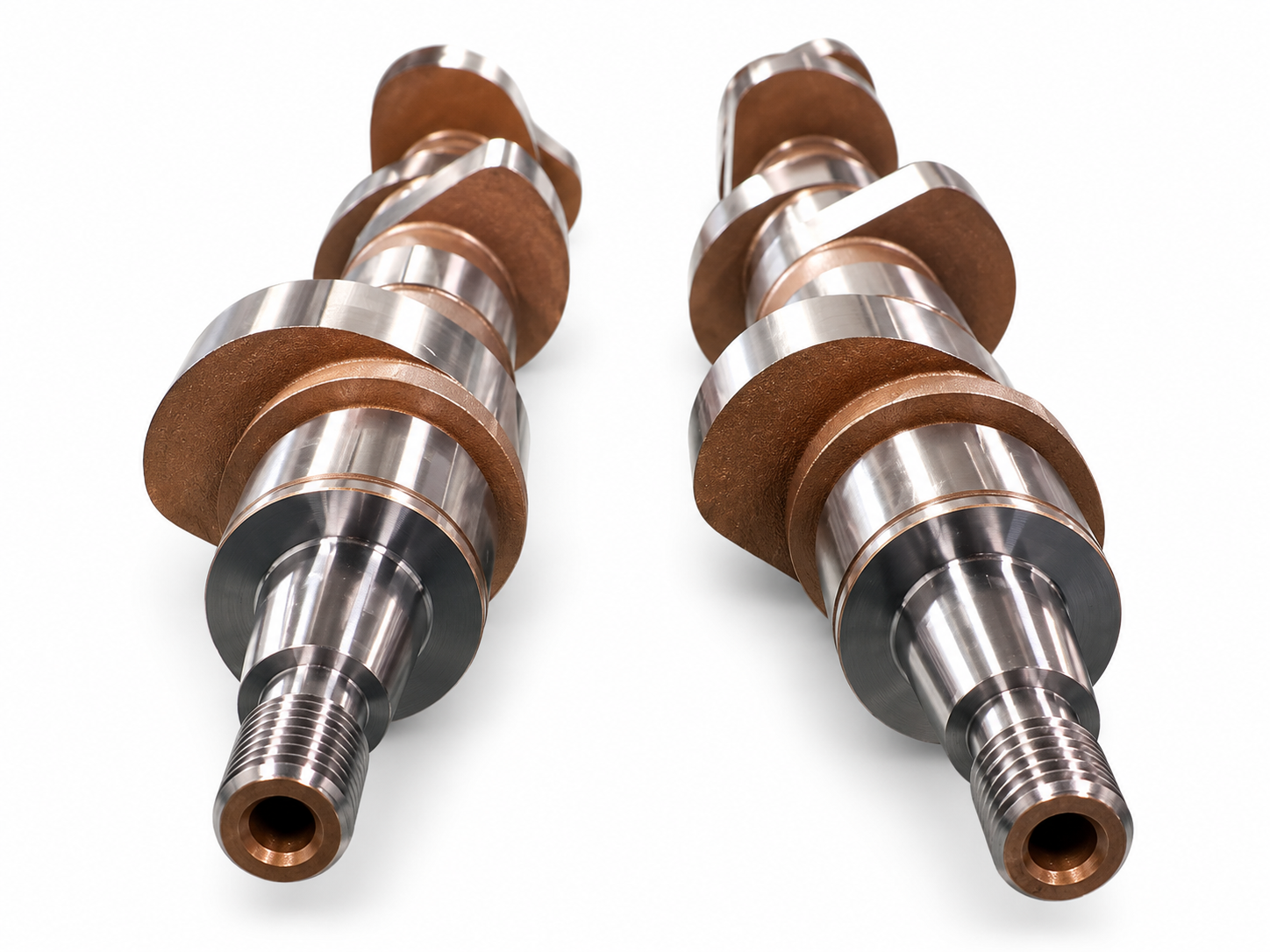
For 6.7 Cummins builds running a dual CP3 setup, the EPC High Volume Dual Port Fuel Rail (from $716.99) provides 21% more internal volume than the factory rail. It is a direct bolt-in replacement and includes your choice of a 2,000 bar or 2,400 bar pressure relief valve.
Fuel lift is a separate question. The PureFlow AirDog II-5G fuel/air separation system (from $1,934.57) is listed for 1994-1998 RAM 2500 and 3500 applications. Confirm the model matches your vehicle before purchase.
12-Valve Cummins Performance Upgrades and Exhaust Flow
On a 12-valve, exhaust flow is often the first bottleneck.
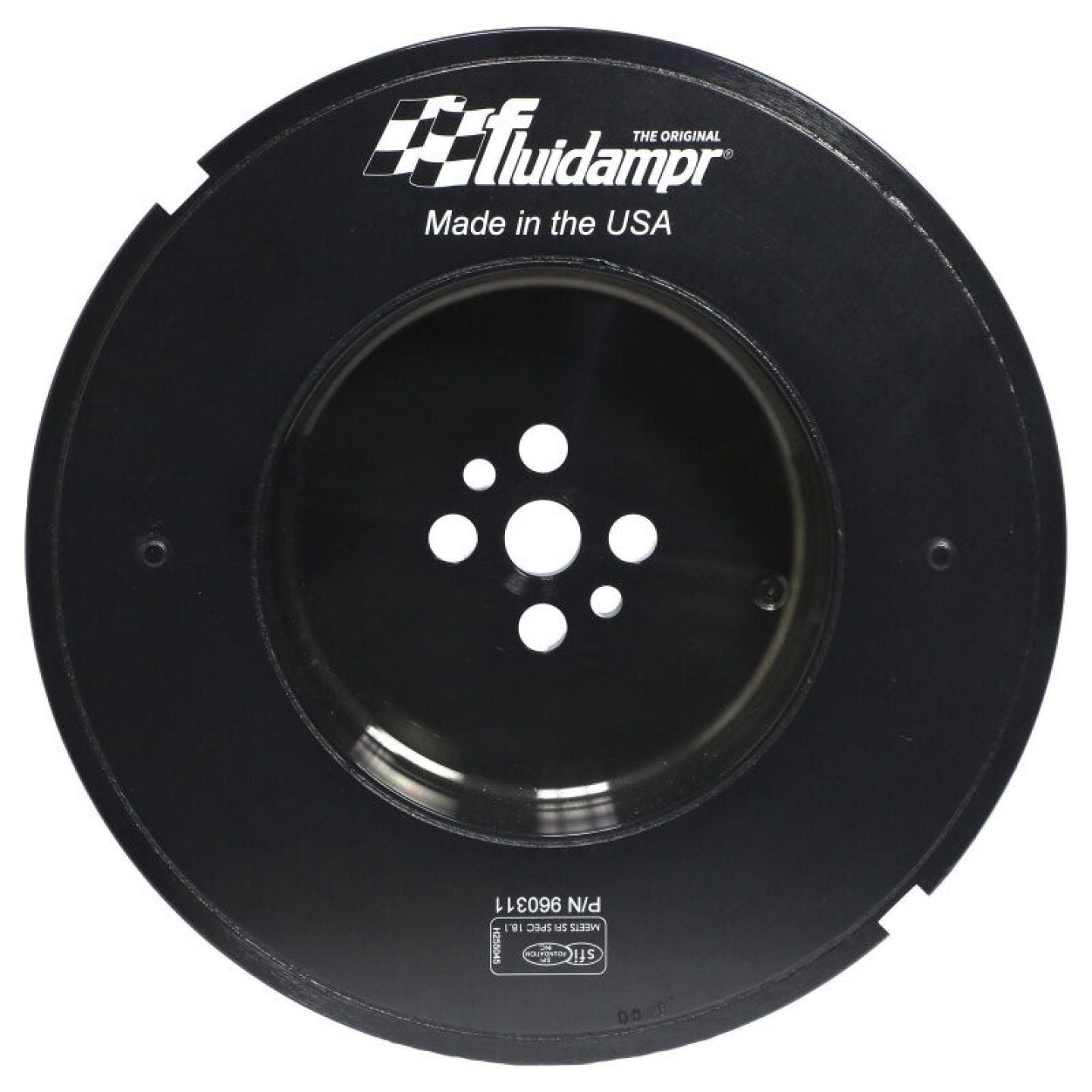
Pair the manifold with a rotating assembly and damper designed for the load. The Fluidampr steel internally balanced damper (from $1,221.00) is listed for 12-valve 6BT applications and is rated SFI 18.1.
Where a 4BT is the platform, the EPC 8VT3TS40 manifold (from $649.00) is a three-piece T3 twin-scroll design for 4BT applications.
Diesel Towing Performance Upgrades: Reliability, Cost and Testing
Towing changes the priorities. Sustained load puts more heat into the exhaust, the turbo and the cooling system, so reliability matters more than peak figures. Build for the way you tow, not for a dyno sheet.
Establish a diagnostic baseline first
Before any work starts, record what the engine is doing now. Without a baseline, you cannot tell whether a change helped or introduced a problem. A useful baseline covers:
- Boost pressure at a known load and rpm.
- EGT at the same load and rpm, measured at the manifold or the probe port you will use afterwards.
- Fuel pressure at the lift pump and at the injection pump or rail.
Record the conditions alongside the numbers: ambient temperature, load, gradient and speed. A reading taken on a cold morning up a hill is not comparable with one taken on a hot afternoon on the flat.
Monitor the right parameters after each stage
After each stage, repeat the same test and watch these parameters:
- Air-fuel ratio. Too rich under load wastes fuel and raises EGT; too lean under boost raises combustion temperature and risk. A wideband gauge or a scan tool reporting lambda is the practical check.
- EGT. Sustained towing EGT should stay within the manufacturer's range for the engine and turbo. If EGT climbs faster than before after a change, the change moved the bottleneck rather than removed it.
- Boost. Compare actual boost against the tune's target. A boost leak shows as low boost and high EGT; overboost shows as a fault code or defuelling event.
Watch out: tuning for a peak dyno figure without monitoring EGT and fuel pressure under a sustained tow load is how engines are damaged on the first long trip after a build.
Reliability risks of aggressive tuning
The reliability cost of added power is not linear. A moderate torque increase within the standard hardware's capacity usually costs little in service life.
Common failure points on a towing build, in rough order of how often they appear:
- Clutch or transmission slipping or overheating under load.
- Head gasket and head studs on engines run at high boost for sustained periods.
- Turbocharger thrust bearing wear where oil supply or drain is marginal.
Each of these is cheaper to address before the failure than after it. A head stud upgrade fitted during a build costs far less than the same job after a gasket failure on the side of a road.
Emissions, warranty and legal compliance
Check the rules that apply in your state or territory before making changes that affect emissions equipment, exhaust configuration or noise.
Warranty is a separate question. Keep records of parts, fitting and tuning, and check the terms that apply to your vehicle before work begins.
Testing methodology: advertised versus verified gains
Advertised gains are usually measured on a dyno with a specific parts combination, tune and healthy engine. They are a useful upper bound, not a prediction for your vehicle. To get a verified figure:
- Use the same dyno, the same operator and the same procedure before and after.
- Correct for ambient conditions where the dyno supports it.
- Change one stage at a time so the effect of each part is attributable.
- Record the mid-range, not just the peak, for towing, the pull from low to mid rpm matters more than the headline number.
Knowing that in advance keeps the budget honest.
Total cost of ownership
Compare the full cost of each stage, not the part price. The full cost includes:
- The component and any required supporting parts (gaskets, studs, oil lines, downpipe, clamps).
- Fitting labour, including any fabrication for clearance or flange mismatch.
- Tuning time and any monitoring gauges needed to verify the result.
A build planned this way is more expensive on paper than a single headline component, and cheaper in practice than discovering the supporting costs after a failure.
Planning Your Next Upgrade Step With EPC
Once your first stage is complete and checked, the next step depends on what the truck tells you. If EGTs run high under load, focus on exhaust flow and fuelling.
If you are planning a larger build, EPC also supplies complete engine packages and conversion components.
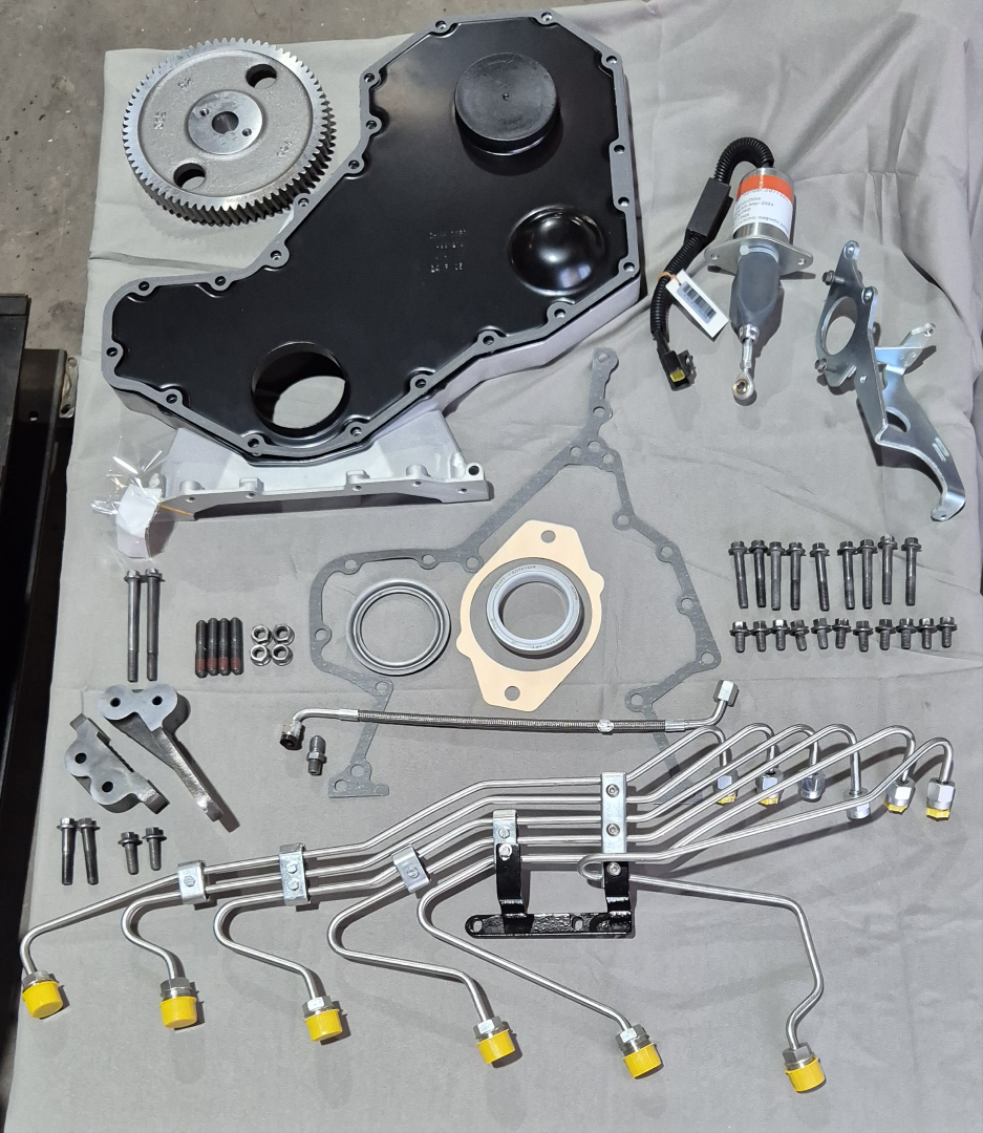
For a complete 24-valve conversion, the 24 Valve P Pump conversion kit (from $2,499.95) replaces a failed VP44 with a mechanical P7100 pump, and includes timing components, mild steel injector lines and mounting hardware.
To confirm fitment for your truck, contact EPC with your year, injection system and intended application before you order.
Frequently Asked Questions
How do you match diesel engine performance upgrades?
Start by confirming the engine generation, fuel system and turbo platform, then choose parts designed to work at the same airflow and fuel level. Matching the turbo to the fuel delivery is the most important step, because a larger turbo with a stock injection pump can run lean and overheat. Keep the build staged, test after each change and log exhaust gas temperature so you can see when one component is outpacing another. Parts from a single engineering source are easier to match than mixing unrelated brands.
Which upgrades should be done first on a Cummins diesel?
Most builders begin with supporting components that protect the engine, such as a quality harmonic damper and a fuel system that can keep up with demand. Exhaust flow upgrades like a 12VT3TS40 manifold or a 24VT4TS40 manifold can come next, followed by turbo and fuel changes once the base is stable. Doing fuel and turbo work in the wrong order can leave the engine under-fuelled or over-boosted, so sequence the work and retest at each stage.
What supporting modifications are needed for a P7100 fuel-system upgrade?
A P7100 camshaft such as the EPC P7100 Hyper Camshaft, priced at $949.99, increases injection rate and should be paired with a fuel system that can supply the extra volume. A high-volume fuel rail such as the EPC 6.7 Cummins High Volume Dual CP3 Fuel Rail, at $716.99, adds 21 percent more internal volume and helps manage pressure spikes under high load. Fuel supply also matters, and the PureFlow AirDog II-5G fuel/air separation system is priced at $1,934.57 for compatible 1994-1998 RAM 2500 and 3500 applications. Confirm compatibility with your pump model before ordering.
Listed prices of EPC performance parts mentioned in the article
