

Cummins Turbo Upgrade for Engine Conversions Explained
Last Updated: November 19, 2026
Quick Summary
A Cummins turbo upgrade should be sized from your power target and airflow, not from the largest turbo that fits the flange. Match the compressor map, turbine housing A/R and drive pressure to how the vehicle is driven, and keep drive pressure at or below boost pressure. Confirm drivetrain torque rating and emissions sign-off before buying.
- Size for the drivetrain's rated torque first, then confirm the emissions pathway before choosing a turbo.
- For a street-and-tow 6BT, keep the pressure ratio around 1.8 to 2.2 inside the largest efficiency island.
- A towing build wants the smaller turbine housing A/R for spool and EGT control.
- Fit EGT probes in the manifold collector, not downstream in the downpipe.
- Upgrade the clutch before the turbo, not after it fails on a loaded hill.
Table of Contents
- Why a Cummins Turbo Upgrade Changes Everything in a Conversion
- Cummins Turbo Sizing Guide for Conversion Builds
- Choosing a 2nd Gen Cummins Turbo Conversion Manifold
- EGT Management for Cummins Swaps
- Fitment, Fueling and Drivetrain Checks Before You Bolt It On
- Troubleshooting Boost Leaks and Low Boost After the Swap
- Register Your Interest in the E-7100 Conversion Range
- Frequently Asked Questions
Why a Cummins Turbo Upgrade Changes Everything in a Conversion
A Cummins turbo upgrade is the single change that decides whether a conversion feels factory-sorted or permanently half-finished. The factory turbo was sized for the engine's original host vehicle, its original weight and its original emissions calibration.
That mismatch shows up predictably: boost arrives late, exhaust gas temperature climbs under load, and the torque curve peaks somewhere useless for towing.
Below, we break down sizing, flange choice, EGT control and the fitment checks that stop a build turning into a fabrication job.
Cummins Turbo Sizing Guide for Conversion Builds
Sizing starts with your power target and your airflow, not with the biggest turbo that fits the flange. A Cummins turbo sizing guide that ignores compressor efficiency will hand you a turbo that makes peak power on the dyno and drives badly everywhere else.
Work through three numbers before you buy anything:
- Target horsepower at the crank, realistic for the fuel system you have
- Boost pressure in psi that gets you there without excessive drive pressure
- Airflow in cfm the compressor must supply at that pressure ratio
For a deeper walkthrough of matching a compressor to a 6BT build, see our guide on how to choose a high performance turbo for a 6BT.
A Worked Sizing Example for a 6BT Conversion
Take a 6BT going into a heavier chassis targeting around 300 hp at the crank. At a pressure ratio of about 2.0 (roughly 14-15 psi of boost at sea level), the compressor must move enough air to support that fuel mass.
For a street-and-tow 6BT, the useful band sits around a pressure ratio of 1.8 to 2.2 with operating points inside the largest efficiency island. Push much past 2.5 on a stock bottom end and you trade reliability for a dyno number. Use the compressor map's airflow axis rather than a rule of thumb.
Reading a Compressor Map Before You Buy
A compressor map plots pressure ratio against airflow, with efficiency islands showing where the turbo works efficiently.
Plot two points: your cruise airflow and your full-load airflow. If cruise sits far left of the surge line, the turbo will bark and surge at light throttle. If full load sits past the choke line, you are heating air rather than compressing it.
Matching Turbine Housing A/R to Your Power Target
The A/R ratio describes the turbine housing's cross-sectional area divided by its radius (Turbo Tech: The Difference An A/R Makes Going From .83 To 1.01 With A GTX3076R Gen II...). Smaller A/R spools faster and chokes earlier.
A common mistake is copying a competition A/R onto a towing build. A towing truck wants the smaller housing for spool and EGT control; a competition engine chasing peak power can justify the larger one. Match the housing to how the vehicle actually gets driven.
Drive Pressure: The Number That Decides Whether the Turbo Works
Boost pressure gets the attention, but drive pressure, exhaust backpressure between the cylinder head and turbine, decides whether the turbo is helping or hurting.
This is where manifold and turbine housing choice meet sizing. A twin-scroll manifold separates exhaust pulses so the turbine sees cleaner, higher-energy flow, letting a smaller A/R housing make the same boost with less drive pressure.
Sizing Against the Drivetrain and the Law
The turbo you can run is capped by two things outside the engine bay: the torque the gearbox and drivetrain can survive, and the emissions and engineering configuration the conversion can be signed off against. Size for the drivetrain's rated torque first, confirm the emissions pathway, then choose the compressor and housing that hit that target with the lowest drive pressure.
Choosing a 2nd Gen Cummins Turbo Conversion Manifold
A 2nd Gen Cummins turbo conversion manifold exists to solve one problem: mounting a modern T4 turbo on an engine whose factory manifold was never designed for it. The flange pattern, the turbo position and the clearance around the engine bay all change.
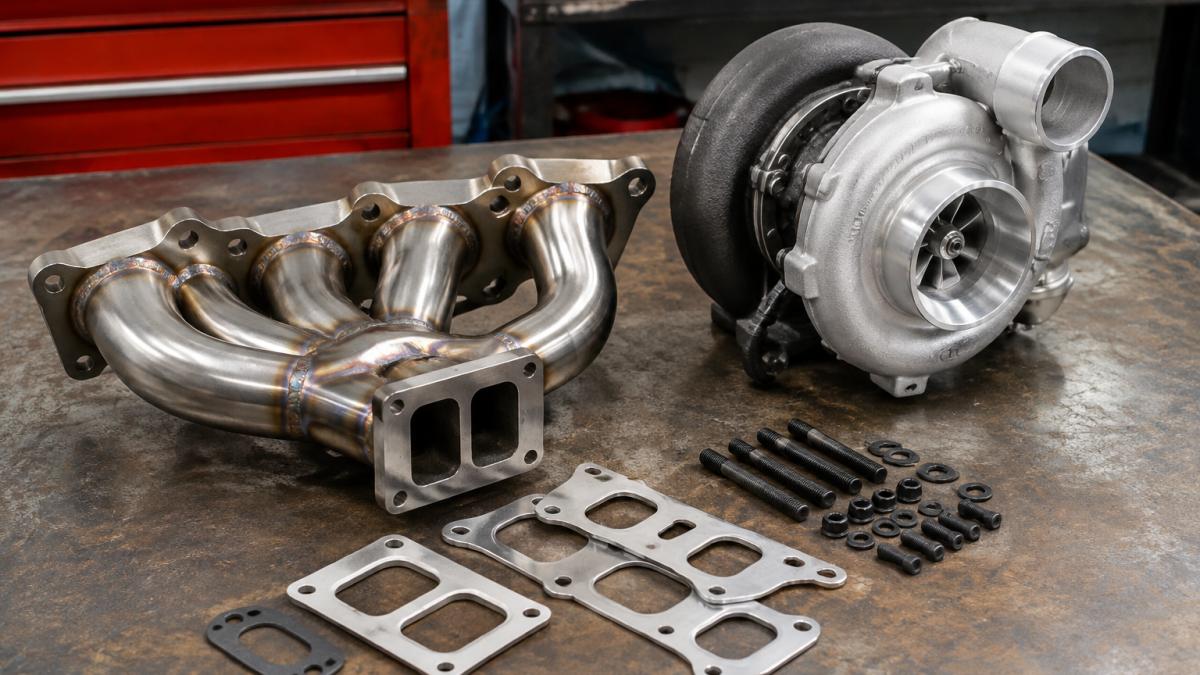
Our 24VT4TS40 is designed for 6.7 Cummins 2nd Gen turbo conversions. It uses 347 stainless steel construction, a T4 twin-scroll flange, a 10mm extended turbo flange for improved clearance, and dual EGT probe ports. It suits street, towing and performance applications. You can view the T4 twin-scroll 24V manifold to check the flange and clearance specs against your build.
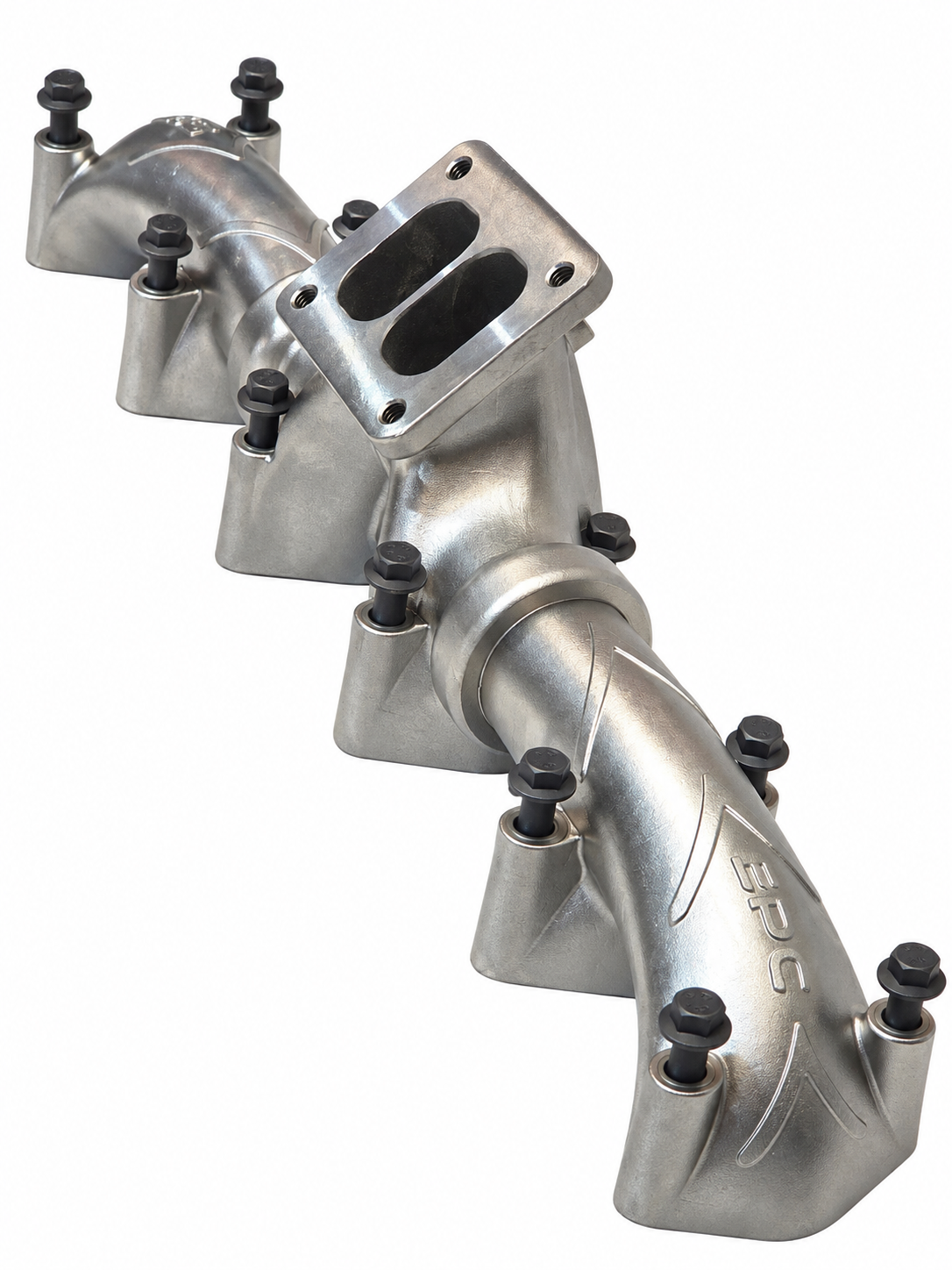
T3 vs T4 Flanges and What They Limit
The flange decides your turbo shortlist before you have looked at a single compressor map. T3 patterns suit smaller frames and tighter packaging. T4 opens up larger turbine housings and higher airflow ceilings.
Neither flange pattern is inherently better; the right choice depends on the build. If your flange decision lands on T3 for a 12-valve build, the T3 12V Cummins exhaust manifold is the matching platform.
| Decision | T3 Pattern | T4 Pattern |
|---|---|---|
| Typical use | Tighter packaging, smaller frames | Larger housings, higher airflow |
| Turbo shortlist | Narrower | Broader |
| Spool character | Earlier with small A/R | Later unless carefully sized |
| Best for | Mild to moderate builds | Serious power targets |
EGT Management for Cummins Swaps
EGT management for Cummins swaps comes down to measuring exhaust gas temperature at the manifold and keeping it inside a range your pistons and turbine can survive.
Fit probes in the manifold collector, not downstream in the downpipe, so you read what the engine is actually producing. The 12VT3TS40 manifold includes two 1/8" NPT ports for EGT probes or other compatible monitoring equipment, and the 24VT4TS40 includes dual EGT probe ports.
Fitment, Fueling and Drivetrain Checks Before You Bolt It On
Fitment checks happen before the turbo goes on. Measure clearance at the turbo flange, downpipe route, intercooler piping and oil feed and drain lines.
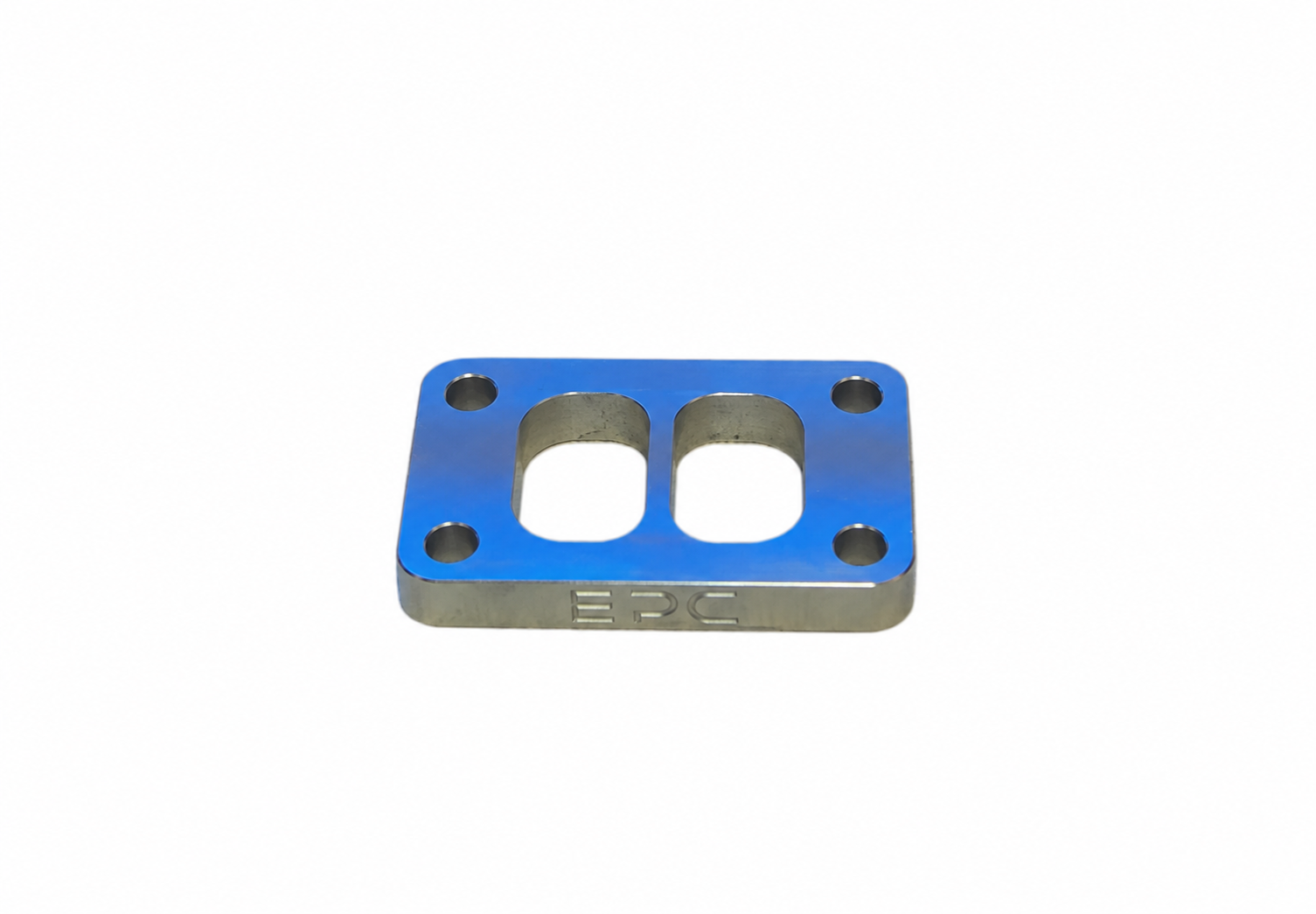
Clearance problems are common on tight conversions. The 10mm stainless T3 exhaust spacer, supplied with two gaskets, provides additional spacing at compatible T3 flange connections. Confirm your flange pattern and bolt spacing before ordering, and you can check the T3 exhaust spacer for your setup.
Fueling Has to Follow the Airflow, Not Lead It
A turbo upgrade increases the air mass the engine can ingest, and the fuel system must deliver matching diesel without driving EGT past the safe band.
Adding fuel first and turbo second drives EGT up before the compressor can supply air to burn it, and the damage is cumulative. Size the turbo, fit the manifold and EGT probes, then add fuel in small increments while logging.
Transmission and Drivetrain: The Torque Limit Nobody Talks About
This is the check most conversion guides skip. A Cummins turbo upgrade does not just add peak power, it moves the whole torque curve up and to the left, and the gearbox, clutch, driveshaft and differentials behind it were sized for the original engine's torque.
Consider the drivetrain components from the flywheel back:
- Clutch and flywheel: a stock clutch rated for the original engine's torque will slip once the turbo brings torque in earlier and harder. Upgrade the clutch before the turbo, not after it fails on a loaded hill.
- Gearbox torque rating: most light-truck manual gearboxes are rated to a continuous torque figure, and a built Cummins can exceed it in the mid-range even if peak power looks modest. Check rated input torque against your target torque curve, not just peak horsepower.
- Driveshaft and yokes: a conversion often changes driveshaft length and angle. Check universal joints and yokes for the new torque load and confirm the slip yoke has enough travel through suspension articulation.
- Differentials and axles: a towing build with a big turbo and tall gearing puts more load through the diff than the original application did. Confirm the axle rating and consider a limited-slip or locker only after the torque path is sorted.
- Engine and gearbox mounts: a Cummins is heavier and shakes harder than many donor engines. Fresh mounts and a check for firewall and sump clearance under torque reversal prevent cracked bellhousings later.
Emissions and Engineering Sign-Off
An engine conversion changes the vehicle's emissions classification, and the swap may need engineering sign-off and emissions approval under Australian requirements. Confirm the current process with your state or territory vehicle standards authority. Before buying a turbo, confirm with a local automotive engineer what sign-off will need: an emissions test, an engineering certificate, or both. A turbo that pushes the engine outside the approved configuration can turn a registered conversion into an unregisterable one.
Troubleshooting Boost Leaks and Low Boost After the Swap
Low boost after a conversion can result from a leak, a stuck wastegate or a calibration that does not account for the new turbo. Work through it systematically rather than replacing parts.
- Pressure-test the induction system from turbo outlet to intake manifold
- Check every intercooler piping joint and clamp under pressure, not at idle
- Verify the wastegate actuator moves freely and holds its set pressure
- Confirm the boost reference line to the wastegate is intact and unrestricted
- Check the manifold-to-turbo and turbo-to-downpipe gaskets for black soot trails
- Log boost against commanded boost to see whether the ECU or the hardware is at fault
A common mistake is chasing a boost fault with a bigger turbo. If the system leaks, more airflow just leaks faster.
Register Your Interest in the E-7100 Conversion Range
If you are planning a Cummins swap and want to know what is coming, register your interest in the E-7100.
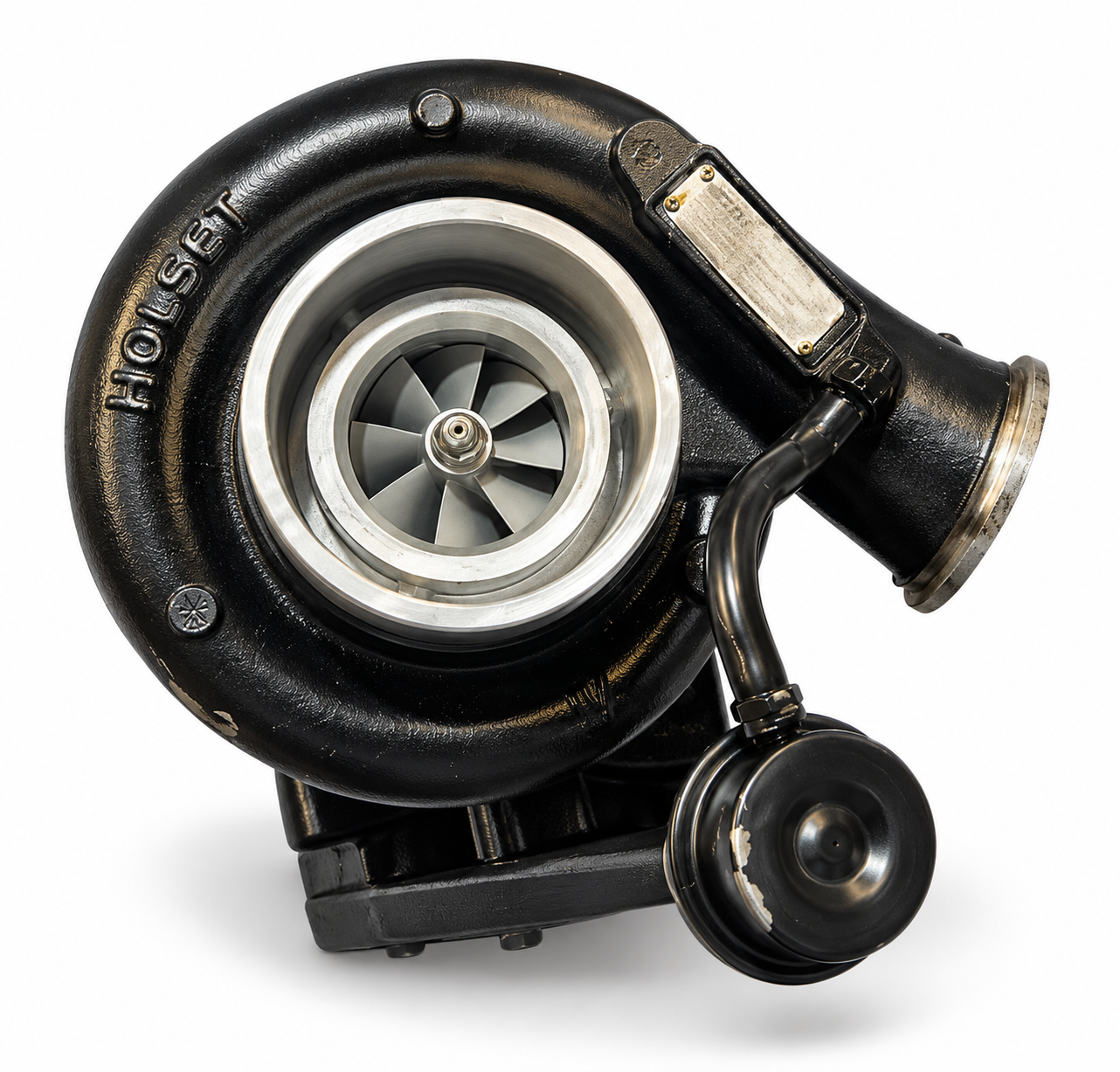
For builds that need a turbo now, our HE300WG Turbocharger is brand new with zero hours beyond initial startup and test-stand running.
Converting a Cummins into a new chassis rewards planning over improvisation. The turbo, manifold, EGT monitoring and drivetrain all have to agree before the first bolt turns.
Frequently Asked Questions
What are the benefits of a 2nd gen turbo conversion on a Cummins?
A 2nd gen conversion moves you to a T4 mounting platform, which opens up a much wider range of turbochargers than the factory arrangement allows. That means better turbo selection for your power goal, improved packaging around the engine bay, and a stronger foundation for future upgrades. Confirm compatibility with your specific engine and mounting layout before ordering parts.
How do I choose the right turbo size for my engine conversion?
Start with your realistic power target and the rpm range you actually drive in, then match a compressor map to that airflow. A towing build wants a smaller turbine housing and a quick spool, while a competition build can trade spool time for top-end flow. Check the compressor map against your boost pressure and CFM requirements rather than picking on peak horsepower claims alone. Undersizing chokes the engine at higher rpm; oversizing gives you lag and poor low-rpm response in a heavy vehicle.
Do I need a new exhaust manifold for a Cummins turbo upgrade?
If your target turbo uses a different flange pattern or needs more clearance than the factory manifold provides, yes. A purpose-built manifold such as a T4 twin-scroll unit provides a mounting platform for the turbo and dedicated ports for EGT probes. Adapters and spacers can bridge small gaps, but stacking them adds joints that can leak and changes turbo position. Match the manifold to the turbo flange and the engine, then confirm bolt spacing and port dimensions before ordering.
Are there specific ADR compliance considerations for engine swaps?
Engine conversions may require approval under the Australian Design Rules and your state or territory vehicle standards authority. Confirm current requirements with the relevant authority before starting the build. Expect to show that the brake, steering and drivetrain systems suit the new output, and that emissions equipment matches the engine's original configuration. Keep documentation for the turbo, manifold, fueling changes and any calibration work.
